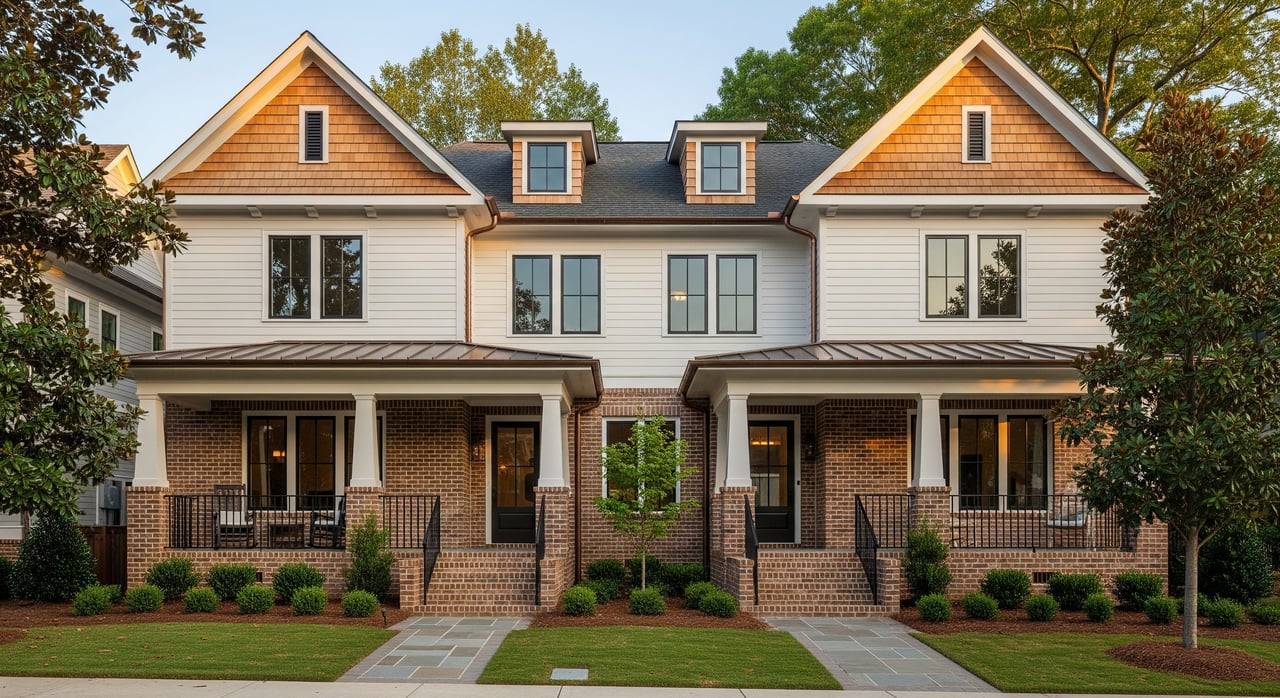
Thinking about buying a duplex in Matthews but not sure where to start? You are not alone. Duplexes can offer two rent streams on one lot, flexible living options, and long-term equity. In this guide, you will learn how to evaluate a duplex in Matthews from zoning to financing to daily operations, so you can move forward with confidence. Let’s dive in.
Why duplexes in Matthews
Matthews sits in southeastern Mecklenburg County within the Charlotte metro, close to key job centers, I-485, and local amenities. That location supports steady rental demand from commuters and nearby workers. If you want a property that can attract a range of tenants while you build equity over time, a duplex can be a smart fit.
Who a duplex fits
- Owner-occupants who want to live in one unit and offset the mortgage with rent from the other unit.
- Long-term investors who value cash flow, simple operations, and potential appreciation.
- Value-add buyers who can improve units, utilities, or curb appeal to raise income.
Zoning and legality in Matthews
Before you analyze numbers, confirm that duplex use is legal for your target parcel. In Matthews, zoning and the town’s development code determine if a duplex is allowed by right, requires conditions, or is not permitted.
Where duplexes are permitted
- Review the Town of Matthews Planning and Zoning maps and the Unified Development Ordinance to see permitted uses, setbacks, lot size, and parking requirements.
- For parcels outside town limits, check Mecklenburg County zoning.
- If an HOA is involved, confirm that covenants do not prohibit multiple dwelling units or certain rental uses.
Conversions and the building code
If you plan to convert a single-family home to a duplex, verify the process in advance:
- Permits, inspections, and a new certificate of occupancy if the use changes.
- Fire separation, egress, smoke and CO detector placement under the North Carolina Building Code, as enforced locally.
- Utility separation if desired. Confirm options for separate electric, gas, and water meters. Shared systems can work, but they change how you handle utilities in leases.
Rental and short-term rental rules
- Check if Matthews or Mecklenburg County requires rental registration, inspections, or specific licensing.
- Short-term rental rules vary by town. Review current ordinances for permitting requirements, owner-occupancy limits, and local tax collection.
North Carolina landlord-tenant law
North Carolina law under Chapter 42 of the General Statutes governs security deposits, notices, required disclosures, and eviction procedures. Review the statutes and consult a local attorney before you lease.
Financing your duplex
Your financing path depends on whether you will live in one unit or buy purely as an investment.
Owner-occupant loan options
- FHA loans: Typically allow 2 to 4 units when you live in one unit. Down payment requirements are often lower than investor loans. Confirm current program rules with a lender and FHA guidance.
- Conventional loans: Many programs from Fannie Mae and Freddie Mac support 2-unit properties for owner-occupants with favorable terms compared to investment-only loans.
Investor financing
- Conventional investment-property loans usually require higher down payments, higher interest rates, and reserve requirements.
- Portfolio lenders, bank loans, and DSCR lenders can finance non-owner-occupied duplexes with varied terms.
- Cash or private lending can help you compete on speed or when a property needs work.
Down payments and reserves
Lender overlays change with the market. Ask about minimum down payment, reserve months, expected debt service coverage, and whether projected rental income can be used for qualification. A pre-approval tailored to a duplex is essential before you write offers.
Taxes and accounting basics
Tax treatment can improve your return when you plan correctly.
Depreciation and deductions
- Residential rental property is depreciated over 27.5 years under IRS rules. Review IRS Publication 527 and speak with a CPA to apply it correctly.
- Typical deductible expenses include mortgage interest, property taxes, insurance, repairs, and operating costs. Capital improvements are handled differently from repairs.
Entity structure and exchanges
- Many investors hold duplexes in LLCs. Liability and tax outcomes vary, so consult a CPA and attorney.
- When you sell, a 1031 exchange can defer capital gains if you reinvest in like-kind property. Plan timelines and identification rules with professionals before listing.
How to analyze the numbers
Always underwrite a duplex with conservative assumptions. Look at the income, expenses, and the cost of capital.
Key metrics and formulas
- Gross Scheduled Rent = sum of all unit rents at full occupancy.
- Effective Gross Income = Gross Scheduled Rent + other income − vacancy allowance.
- Net Operating Income (NOI) = Effective Gross Income − Operating Expenses (exclude mortgage payments).
- Cap Rate = NOI ÷ Purchase Price.
- Gross Rent Multiplier (GRM) = Purchase Price ÷ Gross Annual Rent.
- Cash-on-Cash Return = (NOI − Annual Debt Service) ÷ Cash Invested.
- Debt Service Coverage Ratio (DSCR) = NOI ÷ Annual Debt Service.
Use these to compare options side by side. Cap rate and DSCR help you screen quickly, then cash-on-cash shows what your actual cash is earning after financing.
Setting realistic assumptions
- Vacancy: Use a buffer based on local conditions. Being conservative protects your budget and DSCR.
- Expenses: Include taxes, insurance, maintenance, utilities you cover, landscaping, property management, and reserves. Many small multifamily owners also set aside funds for capital items like roof or HVAC.
- Other income: Consider modest fees for pets, storage, or laundry, if appropriate.
Due diligence checklist
A thorough review reduces surprises and supports a fair price.
Property and systems
- Unit separation: Confirm separate entrances, soundproofing, and any shared spaces.
- Utilities: Identify whether meters, panels, and HVAC systems are split or shared. Separate systems often simplify leasing.
- Structure and systems: Inspect roof, foundation, electrical capacity, plumbing, drainage, and HVAC age.
- Safety and code: Confirm smoke and CO detectors, proper egress, and required fire separation.
- Lead-based paint: For properties built before 1978, follow disclosure rules and consider testing.
Legal and documentation
- Title and zoning: Verify that duplex use is permitted and that no restrictive covenants or HOA rules prohibit it.
- Leases and deposits: Review rent rolls, lease terms, security deposit status, and payment histories. Confirm move-in condition reports.
- Permits: If units were added or converted, verify permits and the certificate of occupancy.
Insurance and hazards
- Insurance: Get quotes for coverage that matches multi-unit use and your lender’s requirements.
- Flood and environmental: Review FEMA flood maps and any known environmental issues.
Rents, comps, and pricing
Market data anchors your pro forma.
Finding rent comps
Compare similar unit sizes, bedroom counts, finishes, and locations in Matthews and nearby Charlotte suburbs. Confirm realistic rent ranges with local property managers when possible, then stress test with a small discount to be conservative.
Sales comps and unit mix
Review recent duplex sales in Matthews and the broader area using local MLS and county records. Compare by price per unit, price per square foot, location, condition, and unit mix. For example, two 2-bedroom units can perform differently than a 3-bedroom plus a 1-bedroom, even at similar square footage.
Operating your duplex
Good systems help you keep income steady and expenses predictable.
Tenant selection and leasing
- Likely renters in Matthews include commuting professionals, small households, and local service-sector tenants.
- Use consistent screening criteria, clear pet and parking policies, and firm rules on yard maintenance and noise. Keep all policies compliant with fair housing standards.
Property management
- Decide whether to self-manage or hire a professional. Consider your distance to the property, time commitment, and how many units you plan to own.
- Typical services include leasing, rent collection, maintenance coordination, inspections, and legal compliance. Review fee structures and contract terms before signing.
Maintenance and reserves
- Budget for routine work like filters, landscaping, and minor repairs.
- Plan for turnover costs, such as paint and flooring.
- Set aside reserves for big-ticket items like roof, HVAC, and exterior updates. A consistent reserve plan protects cash flow when surprises happen.
Exit strategies
Plan your exit before you buy so the property fits multiple paths.
- Hold long term for cash flow and appreciation.
- Refinance to pull out equity when income and value support it.
- Sell to another investor, or use a 1031 exchange to defer capital gains and scale into a larger asset.
- If zoning allows and the market favors it, consider converting to single-family in the future. Confirm code and permitting first.
Next steps in Matthews
Your best move is to pair smart underwriting with local knowledge. Confirm zoning for your target streets, refine a rent and expense model, and line up financing that matches your strategy. When you are ready to tour properties or want a second set of eyes on a pro forma, reach out for help.
If you want a hands-on guide for buying or selling a duplex in Matthews, connect with Denis Dashchenko. You will get responsive, local expertise, practical valuation insight, and a clear plan from search to closing.
FAQs
Can I live in one unit and rent the other in Matthews?
- Often yes, and owner-occupied loan programs for 2-unit properties may be available, but confirm loan rules and local rental regulations before you proceed.
What down payment do I need for a duplex in North Carolina?
- Owner-occupants may access lower down payment options through FHA or certain conventional programs, while investor loans typically require larger down payments and reserves.
How do duplex returns compare to single-family rentals in Matthews?
- Duplexes can improve cash flow since you collect two rents from one parcel, but actual returns depend on purchase price, achievable rents, expenses, and financing costs.
What permits are required to convert a house into a duplex?
- You will need permits, inspections, and a certificate of occupancy that matches the new use, plus compliance with fire separation, egress, and utility requirements.
Are short-term rentals allowed for duplexes in Matthews?
- Short-term rental rules vary by town, so review the latest Town of Matthews ordinances for any permitting, occupancy, or owner-occupancy restrictions.
What are the key financial metrics to evaluate a duplex?
- Focus on NOI, cap rate, GRM, cash-on-cash return, and DSCR, and use conservative vacancy and expense assumptions for accuracy.
Do I need an LLC to buy a duplex in Mecklenburg County?
- An LLC is common for liability and organizational reasons, but it is not required; discuss entity choices and tax impacts with a CPA and attorney.